LRC Foundation
Our overarching purpose is to contribute to innovative and improved agricultural production and enhanced quality of agricultural produce, food security, increased incomes and enhanced job creation for agricultural workers and other agricultural value chain actors Africa by facilitating the exchange and dissemination of agricultural knowledge, skills and information, promotion of technology use and adoption, establishment of market linkages and fostering linkages and cooperation between sector players and stakeholders.
LRC Foundation History
LRC Foundation has its origins in Latia Resource Centre (an entity established in 2008) as a project of Faraja Trust. In 2011 Latia Resource Centre was independently registered as a social enterprise with the intention of training and providing business support to farmers, pastoralists and agribusinesses. In 2016 Latia Resource Centre registered Latia Agripreneurship Institute (to provide apprenticeship training for the youth, and to provide farmers, pastoralists and agribusiness owners access to appropriate production technologies, skills and mentorship that would enable them to sustainably produce healthy crops and livestock. In April 2017 a new company, Latia Agribusiness Solutions was founded which took over the commercial activities, training and extension work previously carried out by Latia Agripreneurship Institute. Following the establishment of LAS and the delineation of Latia’s commercial and not for profit activities, Latia retained its not for profit status and changed its name to LRC Foundation.
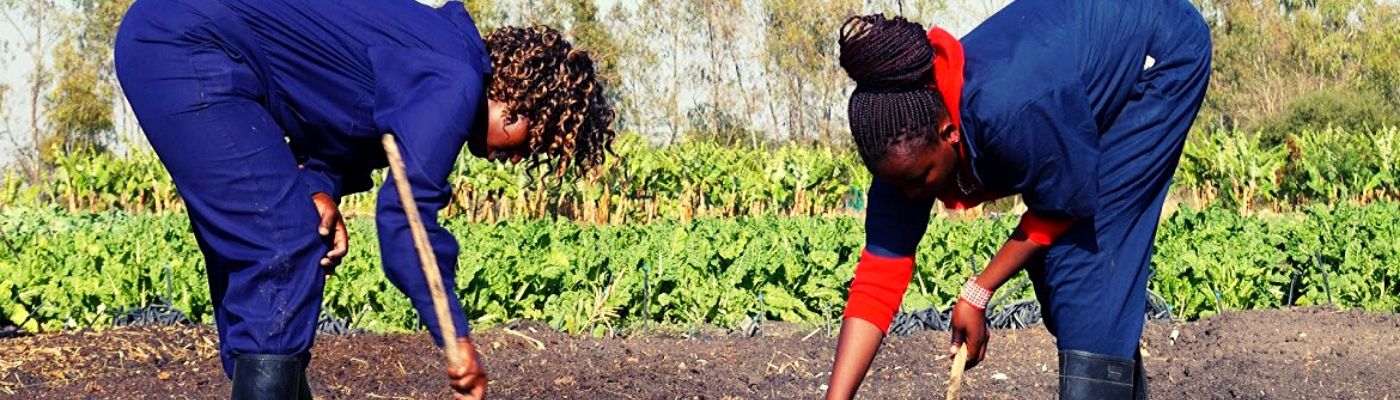
LRC Foundation was founded on the premise that with effective practical training and adequate access to knowledge, technology and operational support, Africa’s agricultural production can be modernized to achieve food security on the Continent The Foundation’s work is geared towards an economically and ecologically sustainable increase in agricultural productivity, with a focus on leveraging experiential learning to provide farmers with practical, hands on productive skills and knowledge that enhance their ability to be economically independent and productive This approach is coupled with initiatives aimed at improving the livelihoods of people and communities that depend on agriculture in Africa with a special focus on the bottom of the pyramid producers The initiatives cover value chain optimization to increase incomes and reduce food loss and wastage, and the promotion of sustainable food production through climate friendly techniques that facilitate renewable energy use, environmental conservation and water resource management for agricultural practitioners and communities
Purpose statement of LRC Foundation
To enable smallholder and medium scale farmers in Africa produce adequate, high quality agricultural produce sustainably and earn better incomes.
The vision of LRC Foundation
A centre of excellence driving agricultural transformation and growth in Africa based on sustainable principles that unlock the potential of smallholder and medium scale farmers.
Core Values of LRC Foundation
- Service Orientation – We exist for the farmer and the enhancement of the welfare of communities We embed farmer first approaches in our programming and consider relevance.
- Teaming – We embrace approaches that enhance cooperation, consultation and collaboration. We value each team member’s contribution and listen to all stakeholder voices.
- Accountability and Transparency – We uphold high standards of integrity and honesty in our dealings We provide reporting and feedback on our activities, and promote a culture of openness.
- Technical excellence – We value expertise. We leverage the technical know how of our partners to deliver at the grassroots We reward competence and recognize merit We believe that having and retaining the best people is the best way of delivering efficiently and effectively.
- Inclusivity – We believe that no one should be left behind. We make considerations for different groups and individuals We proscribe any form of discrimination.
- Curiosity – Continuously learning, continuously improving, embracing innovation, creativity and the adoption of best practices as the hallmarks of our approach.
- Sustainability and responsibility – We are committed to Environment, Social and Governance (ESG) issues. We are committed to mainstreaming environmental sustainability, championing climate resilient practices and lowering the carbon footprint. We enshrine good governance and a strong commitment to social responsibility.